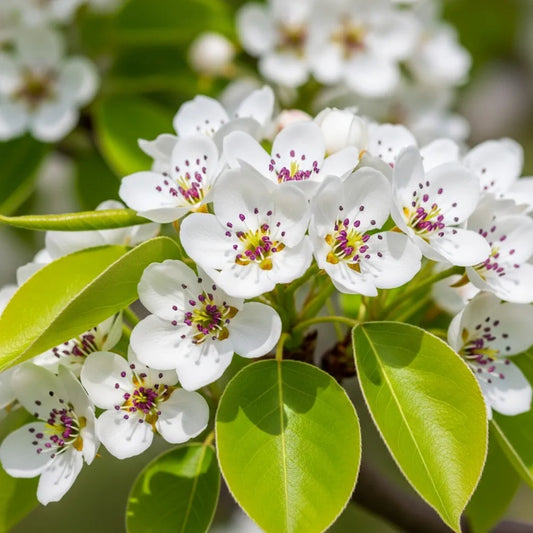
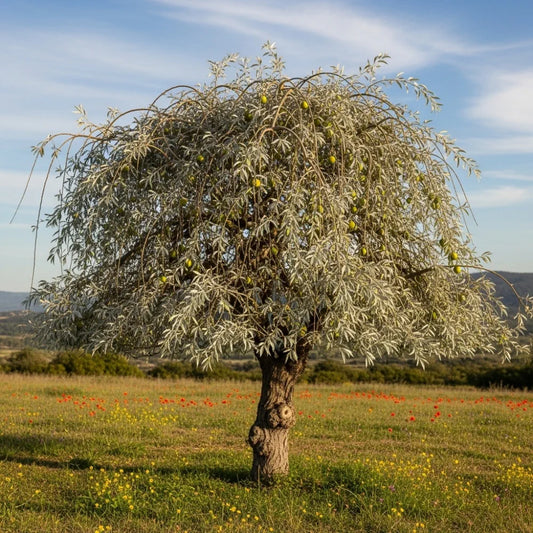
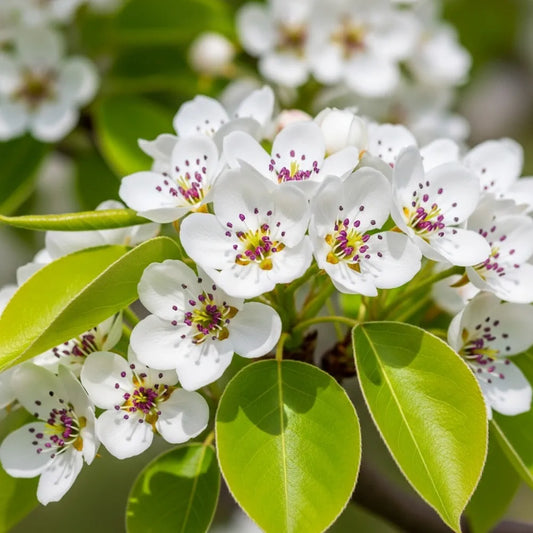
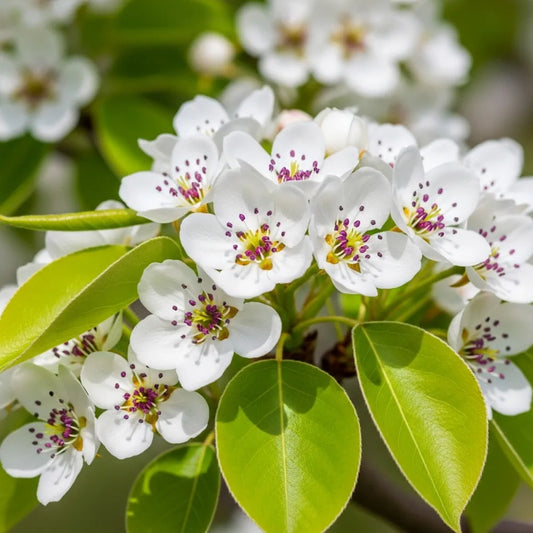
Renowned for their elegant form and spectacular seasonal displays, Ornamental Pear trees are a splendid addition to any British garden. One of the earliest trees to blossom, they herald the arrival of spring with clouds of snow-white flowers, followed by glossy green foliage that transforms into a fiery palette of crimson and purple in the autumn. Hardy and pollution-tolerant, varieties like *Pyrus calleryana* 'Chanticleer' are perfect for screening or adding vertical interest to limited spaces without casting heavy shade.
While these trees flourish in open ground, they are also exceptionally well-suited to container growing on patios and terraces. To complement a contemporary outdoor aesthetic, consider planting them in our durable zinc square planters, available in sophisticated finishes such as matte black, matte grey, white, matte copper, or gloss black. For a warmer, organic feel, our up to 60cm wood square planters in natural wood, black, or grey provide a classic foundation. Alternatively, if you require a substantial pot with character, our 65cm to 90cm diameter rustic whisky barrels, customisable with faded silver, rustic, or painted black rings, offer ample room for root growth while adding a charming focal point to your paved areas. Explore our collection below to find the perfect specimen for your landscape.
 Go to basket