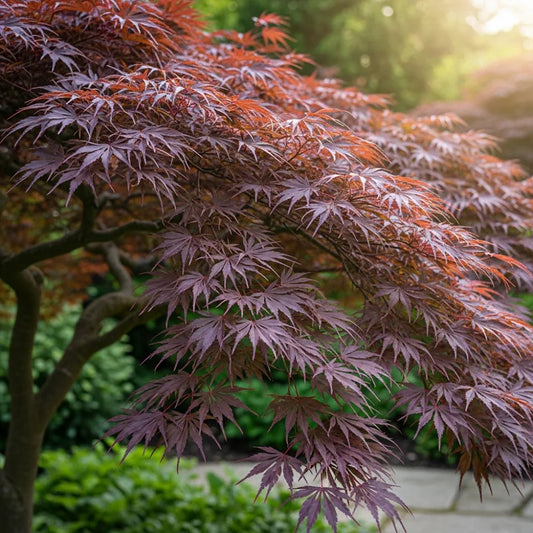
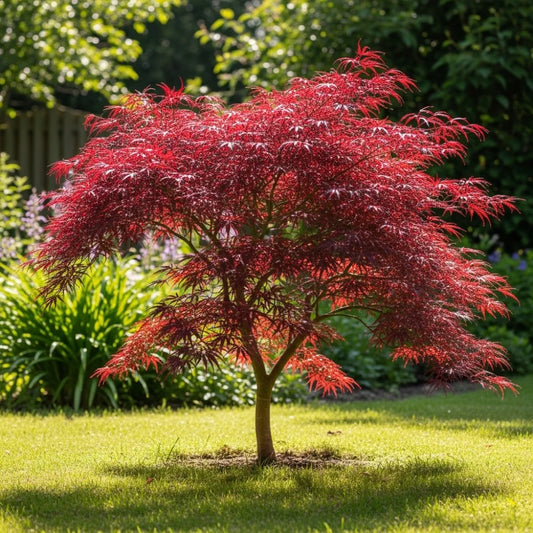
Collection: Japanese Acer Trees

Japanese Acers for Borders and Patio Containers
Read More

Frequently asked questions

  • What type of soil do Japanese Maples need?

    These trees thrive best in slightly acidic, sandy, or loamy soil that retains moisture but drains well. If your garden has heavy clay or very chalky soil, it is often better to grow them in containers using ericaceous compost. Adding organic matter like leaf mould can improve soil structure and moisture retention.
  • Where is the best place to plant a Japanese Acer?

    Most Japanese Acers thrive in a sheltered spot that receives partial shade, protecting them from strong winds and harsh midday sun. Varieties with red or purple leaves may handle more direct sunlight, while variegated types generally require more shade to prevent leaf scorch. Ensure the chosen location allows enough space for the tree's mature canopy.
  • What type of soil is best for Japanese Maples?

    These trees prefer slightly acidic, well-draining soil that is rich in organic matter. They do not tolerate waterlogged conditions or heavy clay, so improving drainage with grit or organic compost is essential. If growing in a container, use an ericaceous compost mix to maintain the correct acidity levels.
  • How often should I water my Japanese Acer?

    Newly planted trees require regular watering during their first year to establish a strong root system. In dry periods, check the soil moisture frequently, as container-grown Acers dry out much faster than those planted in the ground. Avoid overwatering, but ensure the soil remains consistently moist rather than letting it dry out completely.
  • When should I prune my Japanese Acer tree?

    The best time to prune is during the dormant season, typically from November to January, to prevent the bleeding of sap. Minimal pruning is usually sufficient, focusing on removing dead, damaged, or crossing branches to improve the tree's shape. Avoid heavy cutting in spring, as this can weaken the tree and leave it vulnerable to disease.
  • Can I grow a Japanese Acer in a container?

    Yes, Japanese Acers are excellent candidates for container gardening due to their slow growth rate and compact root systems. Choose a pot with good drainage holes and use a loam-based, ericaceous compost to support healthy growth. You will need to re-pot the tree into a slightly larger container every few years as it matures.
  • Why are the leaves on my Japanese Acer turning brown?

    Brown, crispy leaf edges are often caused by leaf scorch, which results from exposure to strong winds, intense sunlight, or dry soil. Lack of water is a common culprit, especially for trees grown in pots or during hot summers. Move the tree to a more sheltered position and increase watering to prevent further damage.
  • What fertiliser should I use for a Japanese Acer?

    Apply a general-purpose or slow-release fertiliser in early spring just before the new leaves begin to unfurl. Avoid high-nitrogen feeds, as these encourage rapid, weak growth that is susceptible to pests and diseases. A single annual application is usually sufficient to maintain leaf colour and tree health.
  • Do Japanese Acers need winter protection in the UK?

    While most Japanese Acers are hardy in the UK, young trees and those in pots may need protection from severe frost. Wrap the pot in bubble wrap or hessian to insulate the roots and place the container near a sheltered wall. Established trees in the ground generally withstand winter well without extra covering.