Collection: Medlar Trees

Heritage Medlar Trees for the British Garden
Read More

Frequently asked questions

  • What are the culinary uses for medlar fruit?

    Medlars are most commonly used to make a rich, amber-coloured jelly that pairs excellently with game, cold meats, and cheeses. The soft, bletted pulp can also be used in desserts, such as tarts or fruit cheeses. Due to their high pectin content, medlar preserves set easily and offer a unique, aromatic flavour.

  • How large does a mature medlar tree grow?

    On a common rootstock like Quince A, a medlar tree typically reaches a height and spread of 3 to 4 metres. They are relatively slow-growing trees that develop a distinctive, gnarled appearance as they age. Regular pruning can help manage the size if you have limited garden space.

  • When is the right time to harvest medlars in the UK?

    Medlars are typically harvested in late October or early November, often after the first frosts have touched the leaves. The fruit should be picked while still hard and attached firmly to the stalk. After picking, the fruit must be moved to storage for bletting before it becomes palatable.

  • Do medlar trees need a pollination partner?

    Most medlar varieties available in the UK are self-fertile, meaning they do not require a separate pollination partner to produce fruit. A single tree will crop well on its own, making it an excellent choice for solitary planting in smaller gardens. The blossoms appear late in spring, which helps them avoid damage from late frosts.

  • When and how should I prune a medlar tree?

    Pruning should be carried out in winter when the tree is dormant to maintain its structure and health. Remove any dead, damaged, or crossing branches to improve air circulation within the canopy. Medlars generally require less pruning than apples or pears, as they fruit on the tips of the current year's growth.

  • Where is the best place to plant a medlar tree?

    Medlar trees thrive in a sunny, sheltered spot but can tolerate partial shade better than many other fruit trees. They prefer deep, well-drained soil that retains moisture, though they are adaptable to various soil types. Ensure there is enough space for the tree to spread, as they naturally grow into a wide, attractive shape.

  • How do you blet medlars to make them edible?

    Bletting involves storing the hard, harvested fruit in a cool, dry place for several weeks until the flesh softens. Place the medlars eye-down on a rack or in a crate, ensuring they do not touch each other to prevent rot. The fruit is ready to eat when the skin darkens and the inside texture resembles a soft paste.

  • What is a medlar and how do I eat the fruit?

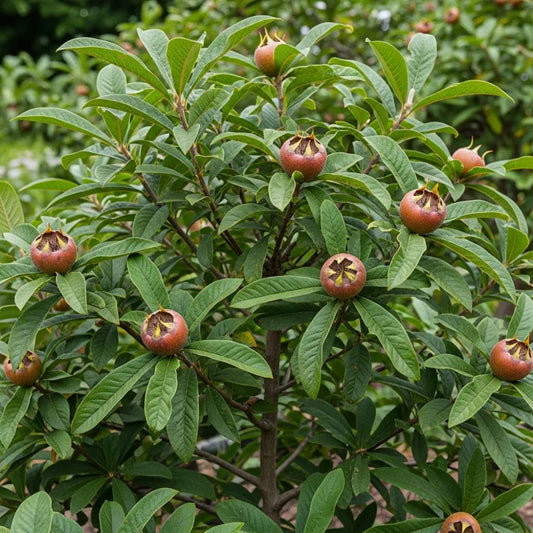
    The medlar is a pome fruit resembling a small, brown apple with a wide, open calyx at the bottom. It is harvested in late autumn but remains hard and inedible until it undergoes a ripening process called 'bletting'. Once the flesh turns soft and brown, it develops a sweet consistency suitable for eating raw or making jelly.