Collection: Lime trees

Premium Lime Trees for Your Home and Garden
Read More

Frequently asked questions

  • Can I grow a lime tree outdoors all year round in the UK?

    Lime trees are not fully hardy in the UK and cannot withstand freezing temperatures for long periods. They are best grown in containers so they can be moved outdoors to a sunny patio during the summer and brought inside before the first frost. A heated greenhouse or a bright conservatory is the ideal environment for overwintering them safely.

  • Why are the leaves on my lime tree turning yellow?

    Yellowing leaves often indicate overwatering, cold stress, or a nutrient deficiency such as a lack of nitrogen or magnesium. Ensure the tree is kept in a draft-free environment with a temperature above 10°C and is not sitting in waterlogged soil. Applying a specialist citrus fertiliser during the growing season can help correct nutrient imbalances and restore green foliage.

  • When is the best time to prune a lime tree?

    The ideal time to prune is in late winter or very early spring, just before the new growth cycle begins. Remove any dead, damaged, or crossing branches to open up the centre of the tree and improve air circulation. You can also pinch back the tips of vigorous shoots in summer to encourage a bushier habit.

  • How often should I water a potted lime tree?

    Water your tree thoroughly when the top few centimetres of soil feel dry to the touch, but ensure the pot has excellent drainage to prevent roots from sitting in water. During the summer, this may be several times a week, whereas in winter, watering should be significantly reduced. Overwatering is a common cause of failure, so always check the soil moisture first.

  • Do I need two lime trees to produce fruit?

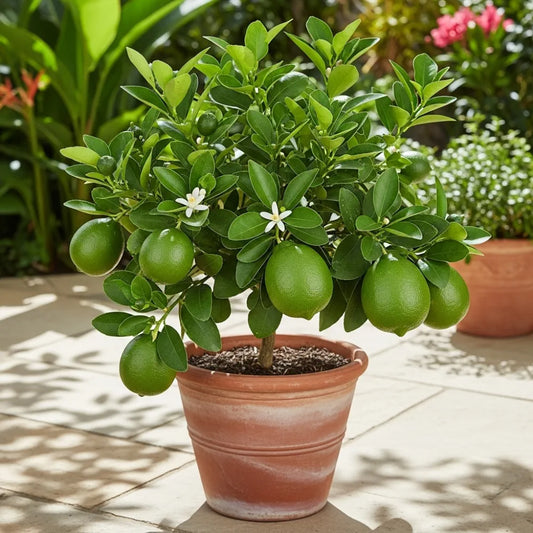
    Most lime varieties sold for home growing, such as the Tahitian lime, are self-fertile and do not require a second tree for pollination. They can produce fruit on their own, making them suitable for smaller gardens or conservatories. However, placing them outdoors in summer to allow access for pollinating insects can often improve the yield.

  • Why is my lime tree dropping its fruit before it ripens?

    Fruit drop is commonly caused by sudden environmental stress, such as a sharp change in temperature, irregular watering, or moving the pot to a darker location. To prevent this, maintain a consistent watering schedule and avoid placing the tree near radiators or cold drafts. Ensuring the humidity levels are adequate can also help the tree retain its fruit.

  • What is the difference between a citrus lime and a Common Lime tree?

    In the UK, the native broadleaf tree *Tilia* is traditionally called the 'Common Lime' or 'Linden', but it is unrelated to the citrus fruit. The *Tilia* is a large deciduous tree often found in parks and avenues, while the citrus lime is a tender, fruit-bearing plant grown in pots. It is important to distinguish between the two when purchasing plants for your garden.

  • What is the best type of compost for potting lime trees?

    Lime trees require a free-draining, slightly acidic soil mix to thrive in planters for trees and prevent root rot. It is best to use a dedicated citrus compost or a John Innes No. 2 loam-based compost mixed with grit or perlite for added drainage. Avoid using standard multi-purpose compost on its own, as it can retain too much moisture and compact over time.

  • Can citrus trees be successfully grown in containers?

    Yes, many citrus varieties thrive in pots, especially in climates where they need to be moved indoors for winter. Container growing allows for better control over soil conditions and plant placement. This method is popular for varieties like Meyer lemons or calamondin oranges.