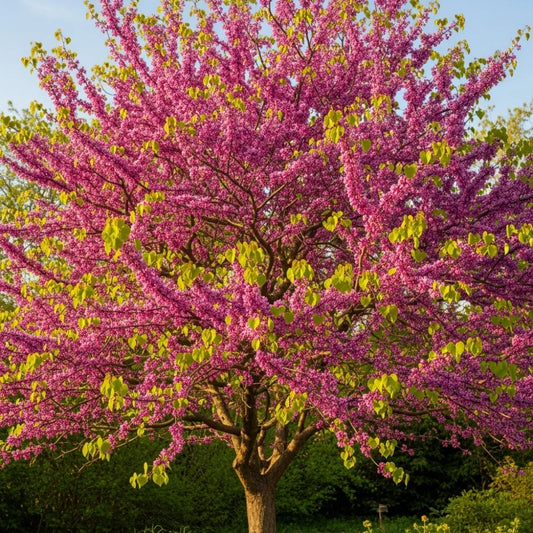
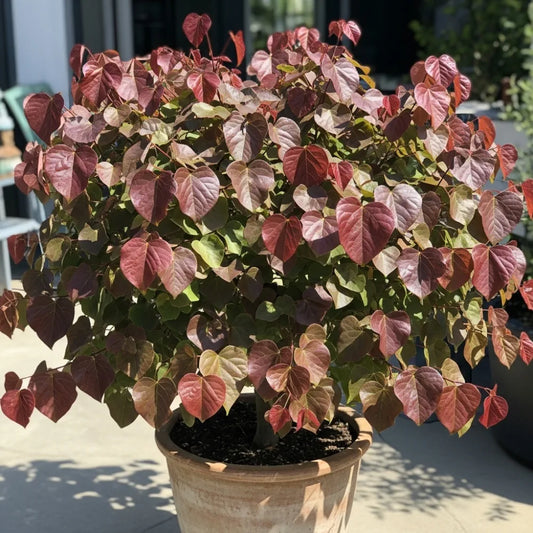
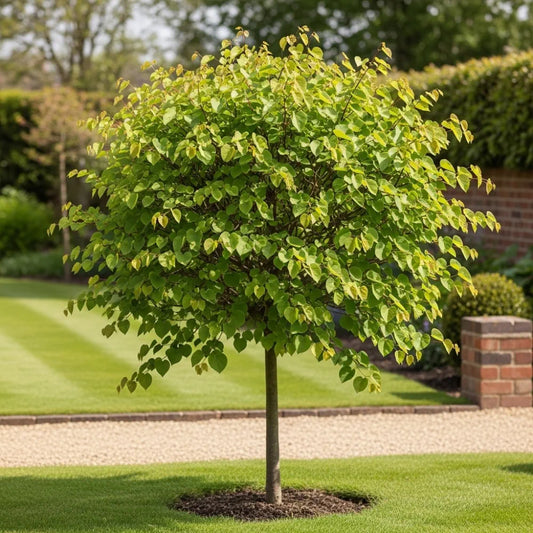
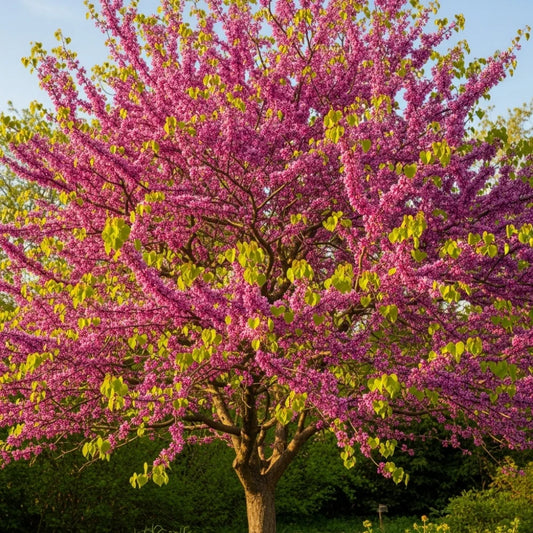
Discover the enchanting beauty of Cercis trees, a captivating addition to any British garden known for their spectacular display of pea-like pink or purple blossoms that emerge directly from the bark in spring. Often called the Judas Tree or Redbud, these ornamental favourites are prized for their distinctive heart-shaped leaves which offer a kaleidoscope of colour, shifting from vibrant coppery-reds in spring to deep greens and purples, before turning buttery yellow in autumn. Ideally suited to smaller gardens, shrubberies, or as a standalone specimen, the Cercis is hardy and relatively low maintenance. For those with limited ground space or seeking a striking feature for a paved area, these trees adapt wonderfully to container growing.
You might consider housing a younger specimen in our sleek zinc square planters, which come in sophisticated finishes such as matte black, matte grey, white, matte copper, or gloss black to match modern exteriors. Alternatively, to complement a more traditional setting, our up to 60cm wood square planters in natural wood, black, or grey provide a classic home for your tree. For larger specimens requiring more root depth, our robust 65cm to 90cm diameter rustic whisky barrels, available with faded silver, rustic, or painted black rings, offer excellent drainage and a charming, established aesthetic. Explore our range below to find the perfect Cercis to bring year-round interest and structural elegance to your outdoor space.
 Go to basket