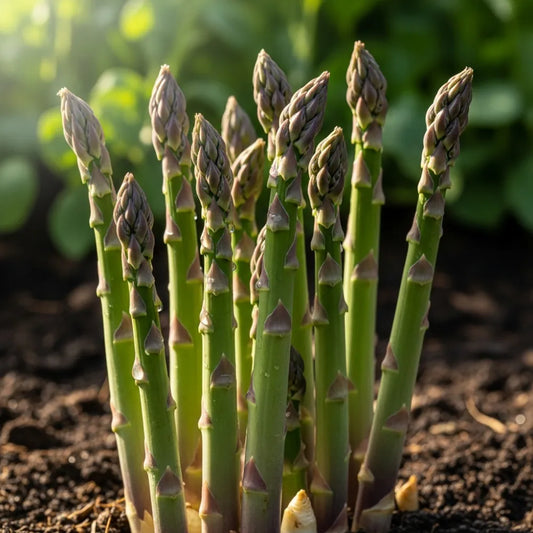
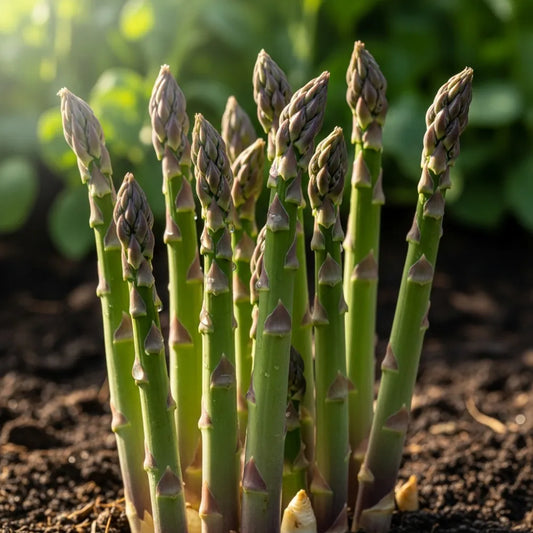
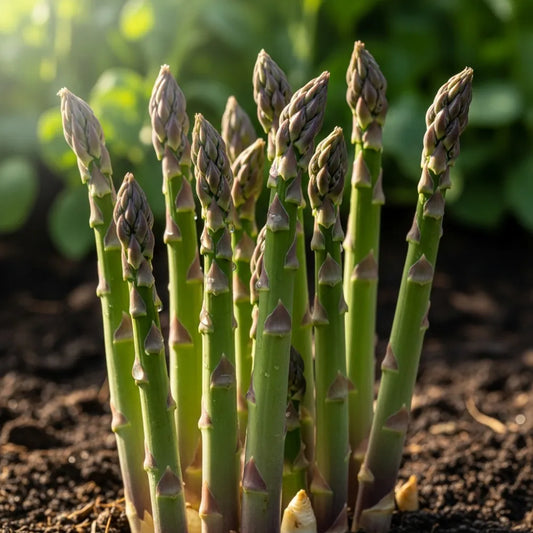
Collection: Asparagus Plants

Premium British Asparagus Plants for Garden and Patio
Read More

Frequently asked questions

  • How do I identify and treat the asparagus beetle?

    The asparagus beetle is a red and black insect that chews on the spears and foliage, often leaving black eggs on the stems. If left uncontrolled, they can strip the plant of bark and leaves, severely weakening the crown. The most effective organic control is to pick the beetles and their larvae off by hand regularly.

  • What is the typical lifespan of an asparagus bed?

    A well-maintained asparagus bed can remain productive for up to 20 years. Over time, the crowns may become congested and the spears will become thinner. Once the yield and quality significantly decrease, it is usually time to establish a new bed in a fresh location.

  • How far apart should asparagus crowns be spaced?

    Space the crowns approximately 30cm to 45cm apart within the trench to provide adequate room for growth. If planting multiple rows, ensure there is at least 45cm between rows to allow for easy access. Proper spacing is crucial for air circulation, which helps minimise the risk of fungal diseases.

  • How should I care for asparagus plants in autumn?

    Once the foliage has turned yellow and brittle in late autumn, cut the stems down to about 5cm above the soil surface. Clear away any weeds and apply a thick mulch of well-rotted manure or garden compost. This protects the crowns from frost and adds nutrients back into the soil for the following season.

  • Why are all-male asparagus varieties often recommended?

    All-male hybrid varieties do not expend energy producing seeds, directing their resources into spear production instead. This generally results in higher yields and earlier harvests compared to older, mixed varieties. Additionally, they prevent self-seeding, which avoids overcrowding in the vegetable bed.

  • What type of soil is required for growing asparagus?

    Asparagus requires well-drained soil with a pH between 6.5 and 7.5 to thrive. If your garden has heavy clay soil, you should create raised beds or incorporate grit to prevent the roots from rotting. A sunny, sheltered position is also essential to protect the tall ferns from wind damage.

  • When is the best time to plant asparagus crowns?

    Asparagus crowns are best planted in spring, typically during March or April when the soil is workable. It is advisable to prepare the planting bed during the previous autumn to ensure the ground is settled. Planting during this specific window allows the crowns to establish roots before the summer heat.