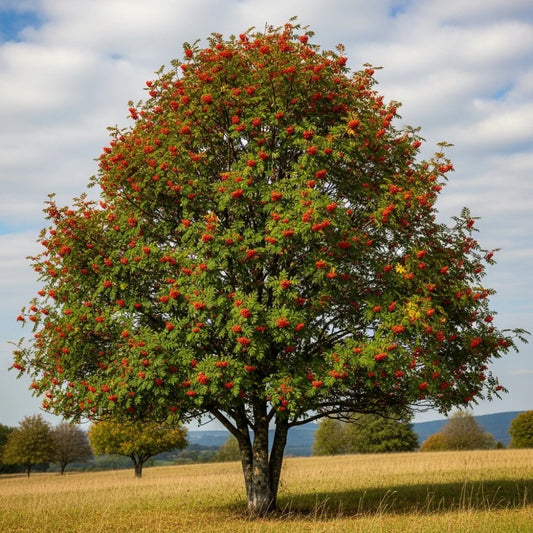
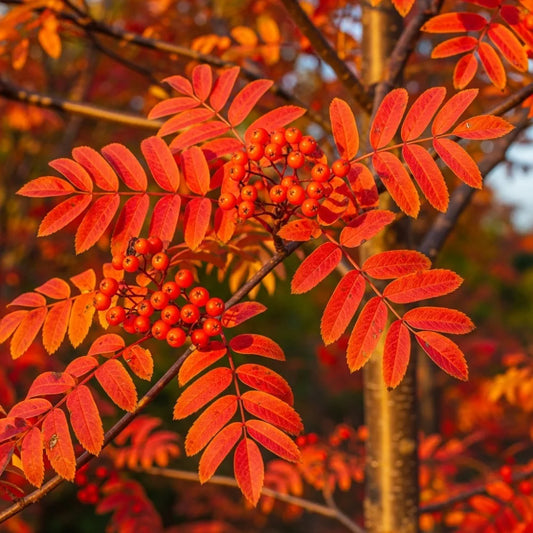
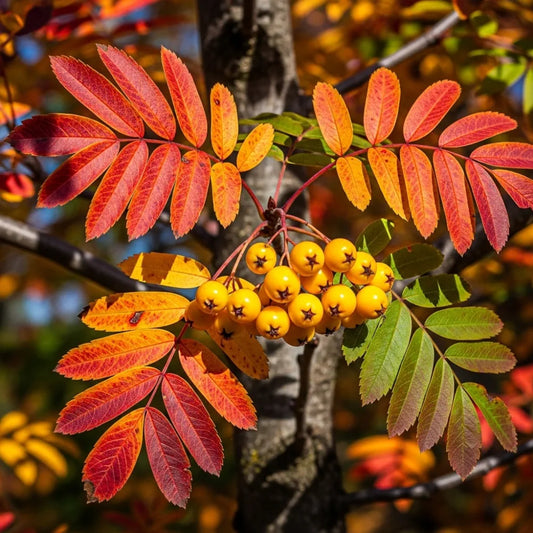
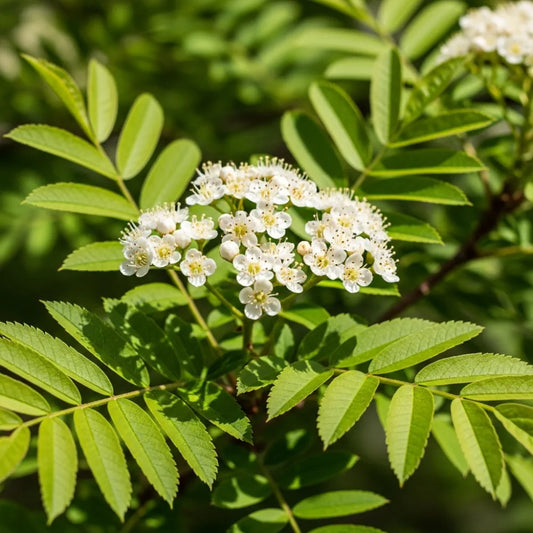
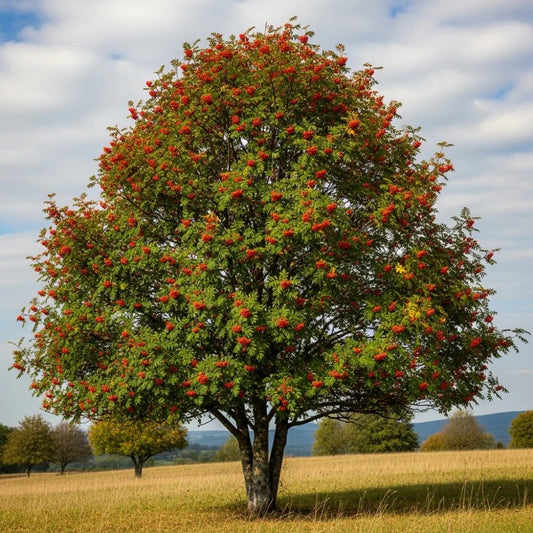
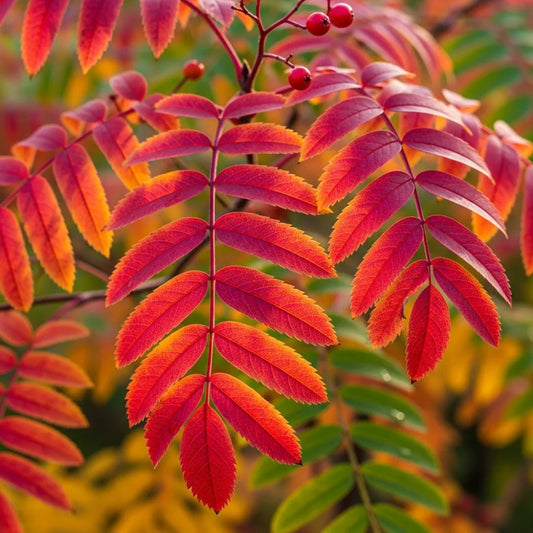
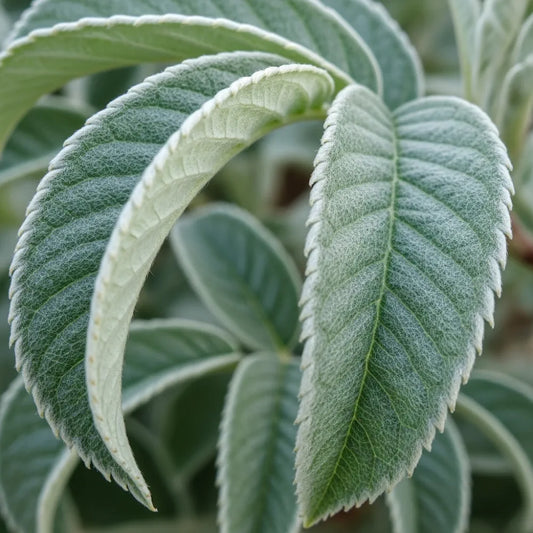
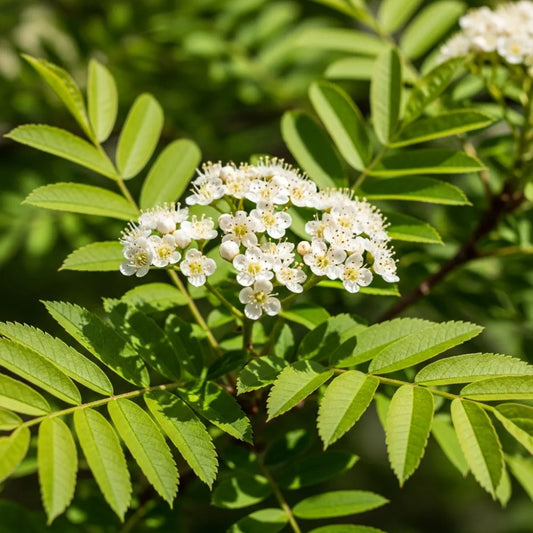
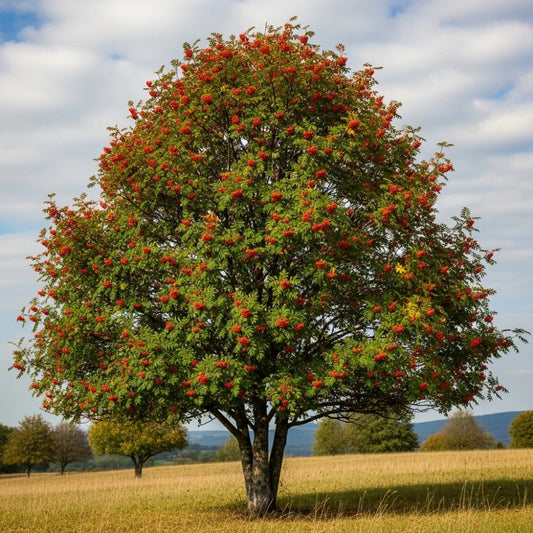
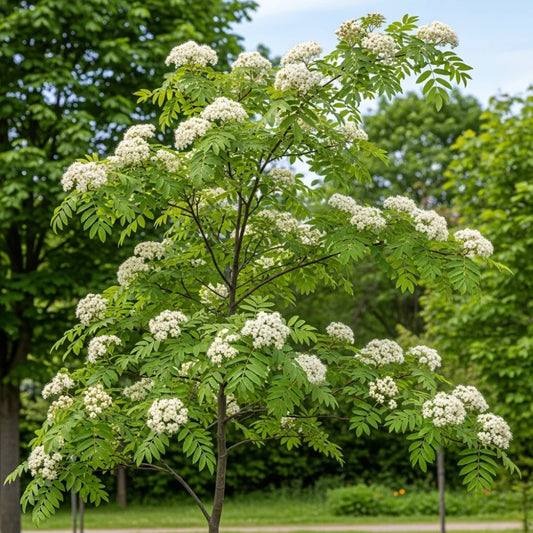
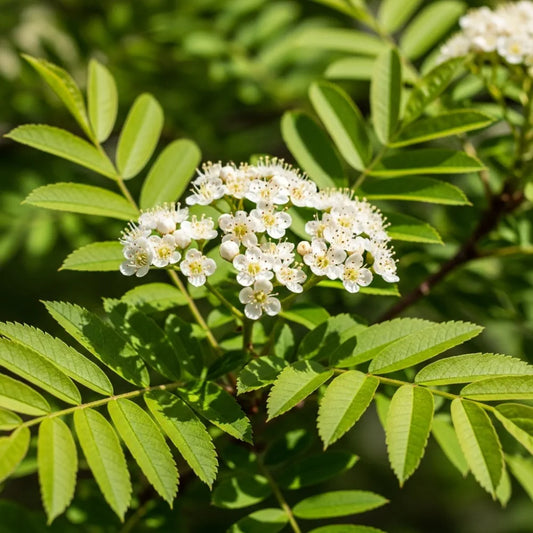
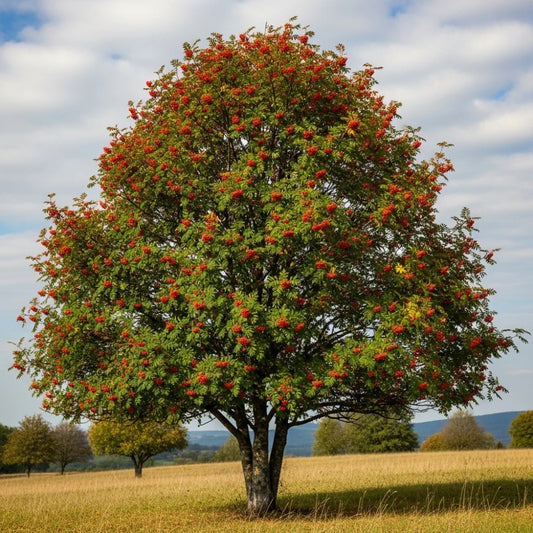
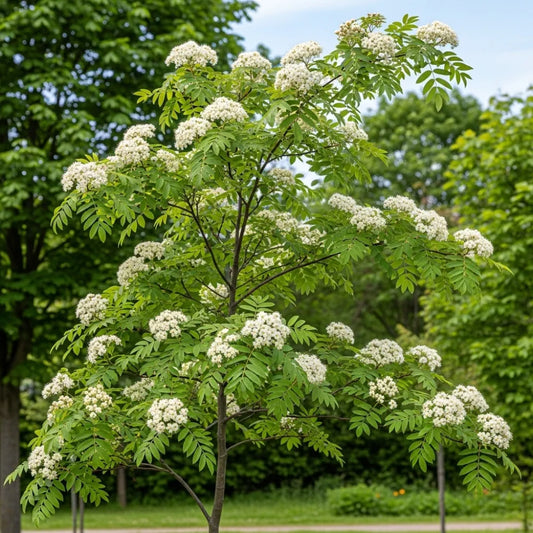
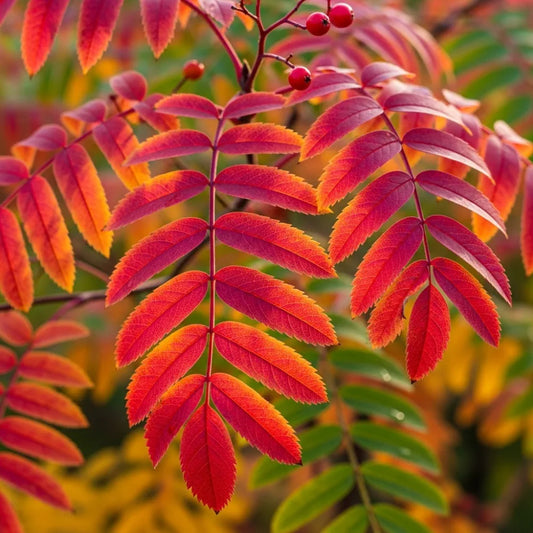
Discover our extensive range of Sorbus trees, affectionately known in the UK as the Rowan or Mountain Ash. Celebrated for their ornamental value and hardy nature, these trees are a staple of the British landscape, offering interest throughout every season. Spring brings distinctive clusters of creamy-white blossoms, followed by lush, feather-like foliage that often turns fiery shades of red and orange in the autumn. The true highlight, however, is the abundance of berries, ranging from traditional scarlet to unique pinks, whites, and yellows, which provide an essential feast for garden birds and pollinators.
Perfect for gardens of all sizes, Sorbus trees are versatile and adaptable, thriving in a variety of soil conditions. Their typically slender, upright habit makes them an excellent choice for smaller urban gardens or as a striking feature in a larger border.
If you are looking to introduce vertical interest to a patio or paved courtyard, many Sorbus varieties adapt beautifully to container growing. To support their growth, we recommend selecting a robust container that complements your outdoor décor. For a charming, traditional aesthetic, our 65cm to 90cm diameter rustic whisky barrels, available with faded silver, rustic, or painted black rings provide ample room for root development. Alternatively, for a sleek, modern contrast against the foliage, you might opt for Our zinc square planters, available in finishes such as matte black, matte grey, white, matte copper, or gloss black. We also offer up to 60cm wood square planters in natural wood, black, or grey, offering a timeless and organic foundation for your tree.
 Go to basket