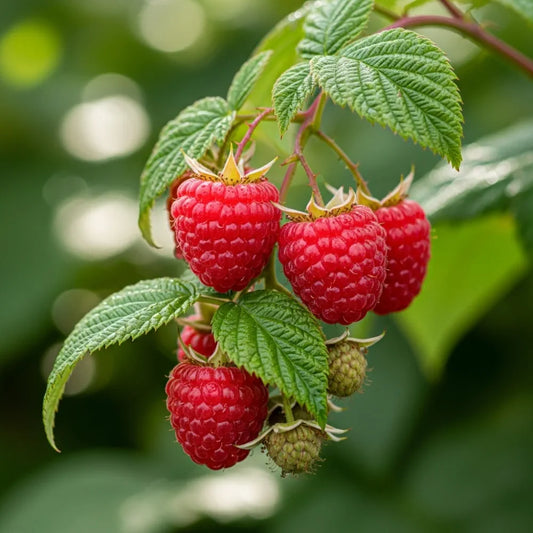
Collection: Raspberry Cane

Premium Raspberry Canes for Summer and Autumn Harvests
Read More

Frequently asked questions

  • When is the best time to plant raspberry canes?

    The ideal time to plant bare-root raspberry canes is between November and March when the plants are dormant. Ensure the ground is not frozen or waterlogged before digging your trench to prevent root damage. Pot-grown raspberries can be planted at any time of year, provided they are watered frequently during dry spells.

  • What is the difference between summer and autumn-fruiting raspberries?

    Summer-fruiting varieties produce fruit on one-year-old canes during June and July. Autumn-fruiting types produce berries on the current year's growth and are harvested from late August until the first frosts. Knowing which variety you have is essential for applying the correct pruning technique.

  • How far apart should I plant raspberry canes?

    Space individual canes approximately 45cm to 60cm apart within the row to allow adequate room for root establishment. If planting multiple rows, leave about 1.5m to 1.8m between them to facilitate easy access and airflow. Proper spacing prevents overcrowding and reduces the risk of fungal diseases.

  • Do raspberry canes need support structures?

    Yes, most raspberry canes require support to keep the heavy fruit off the ground and prevent wind damage. Summer-fruiting varieties are typically trained against a post and wire system to manage their height. Autumn-fruiting varieties are shorter but still benefit from a simple trellis or parallel wires to keep them tidy.

  • How should I prepare the soil before planting raspberries?

    Raspberries thrive in well-drained, slightly acidic soil that retains moisture without becoming waterlogged. Weed the area thoroughly and dig in plenty of well-rotted manure or garden compost to improve soil structure. Avoid planting in soil that has previously grown potatoes or tomatoes to prevent disease transmission.

  • When and how should I prune autumn-fruiting raspberries?

    Autumn-fruiting raspberries should be pruned in late winter, usually around February before new growth starts. Cut all canes down to ground level to encourage vigorous new stems to emerge in the spring. This method is straightforward because these plants fruit on the new wood produced within the current season.

  • Why are my raspberry leaves turning yellow?

    Yellowing leaves often indicate a nutrient deficiency, such as a lack of iron or magnesium, or problems with waterlogged soil. This condition, known as chlorosis, frequently occurs if the soil is too alkaline for the plant to absorb minerals effectively. Applying a balanced fertiliser and ensuring good drainage can often resolve the issue.

  • How long do raspberry plants typically produce fruit?

    A well-maintained raspberry patch generally remains productive for 10 to 15 years before yields begin to decline. Over time, plants may accumulate viruses or become exhausted, necessitating replacement with fresh certified stock. To prolong their lifespan, mulch annually and remove weak or overcrowded canes regularly.