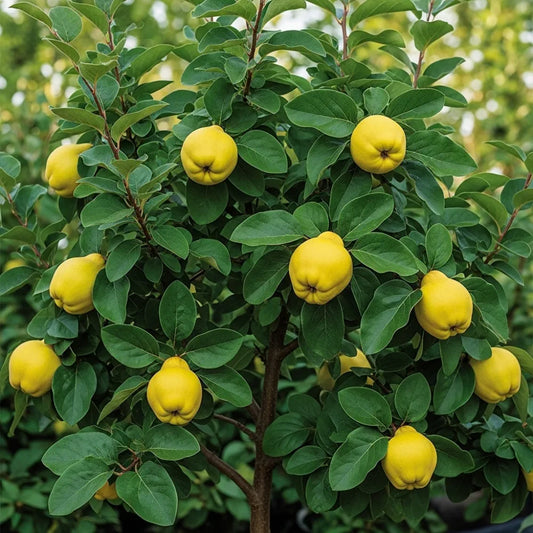
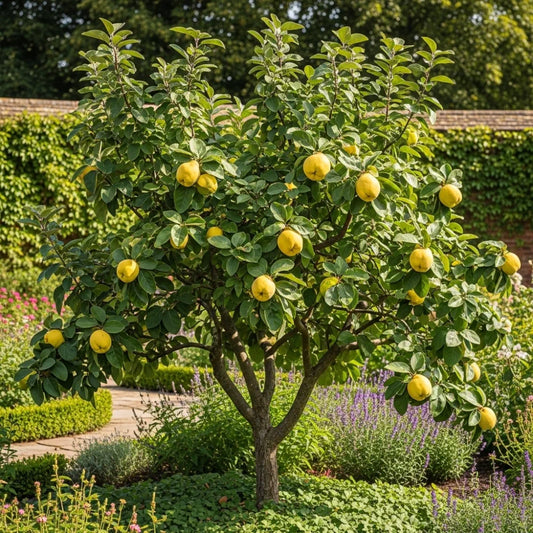
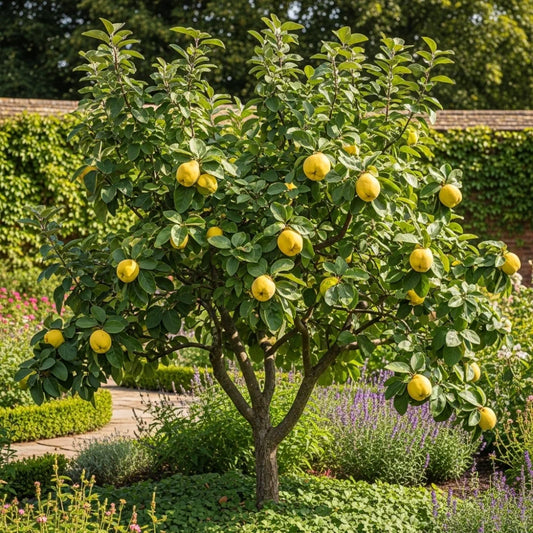
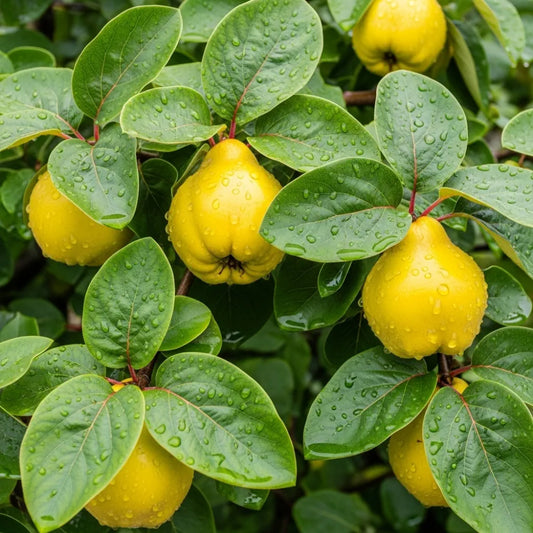
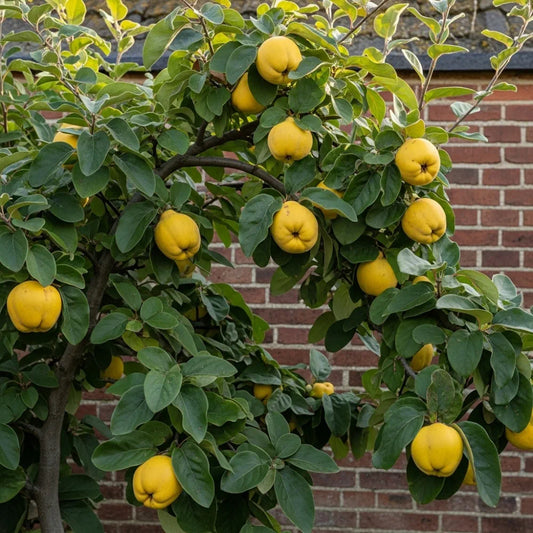
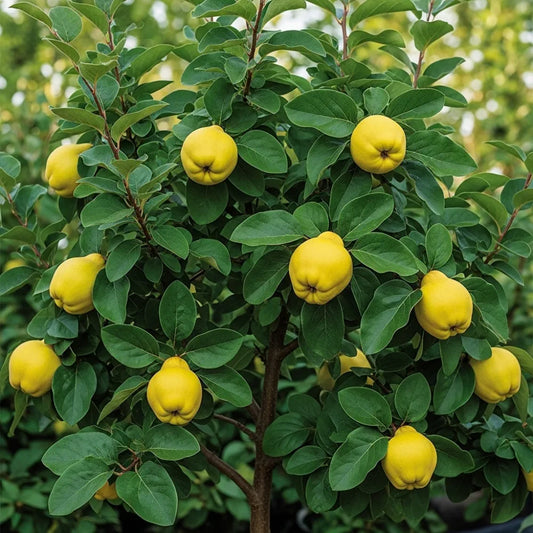
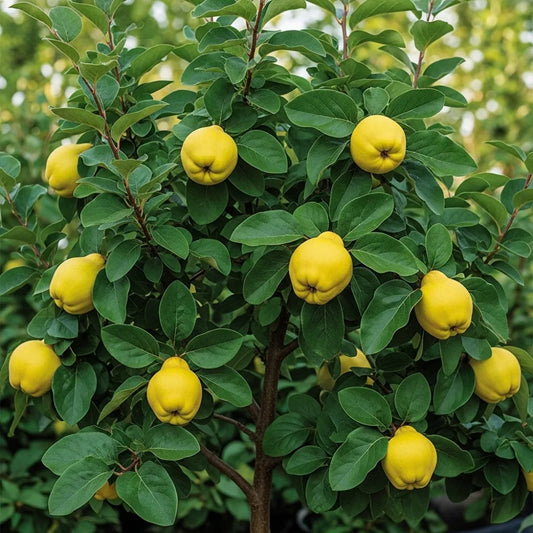
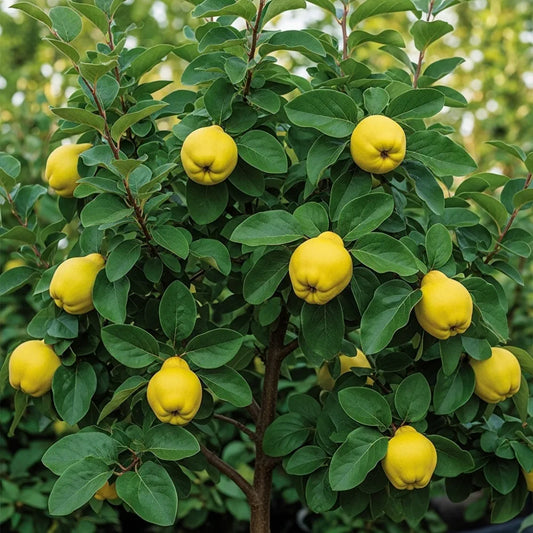
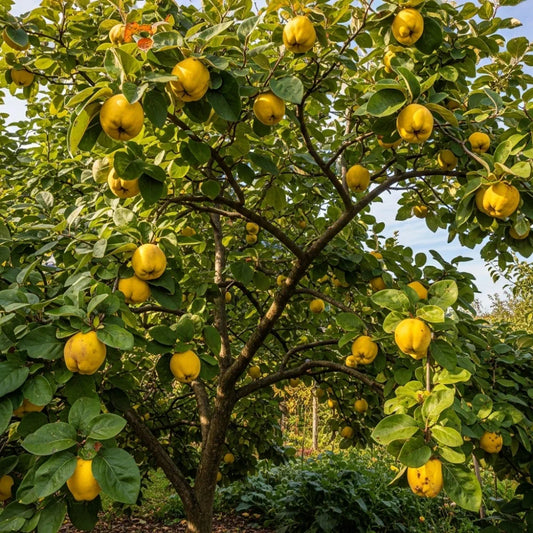
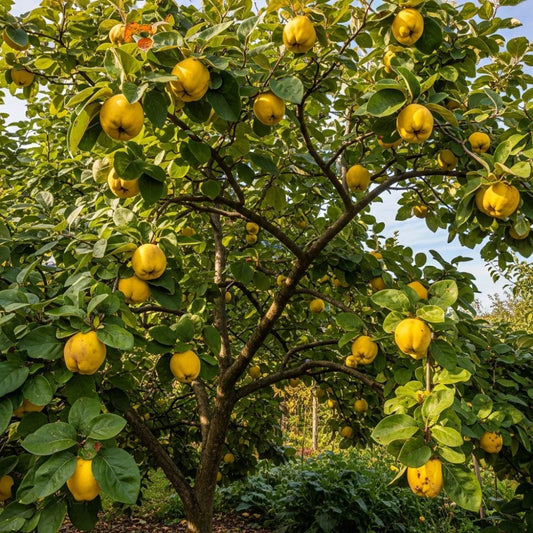
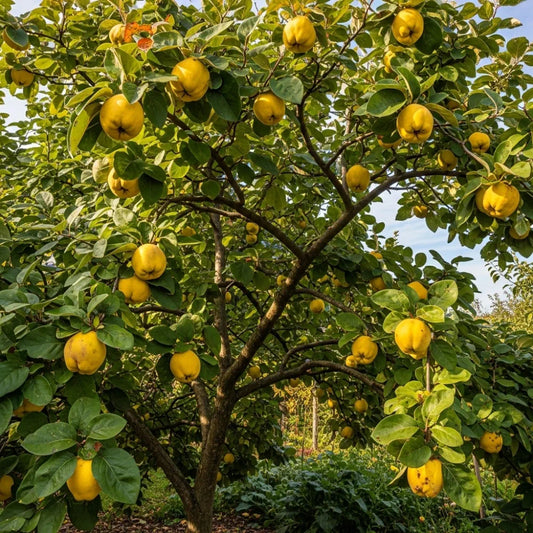
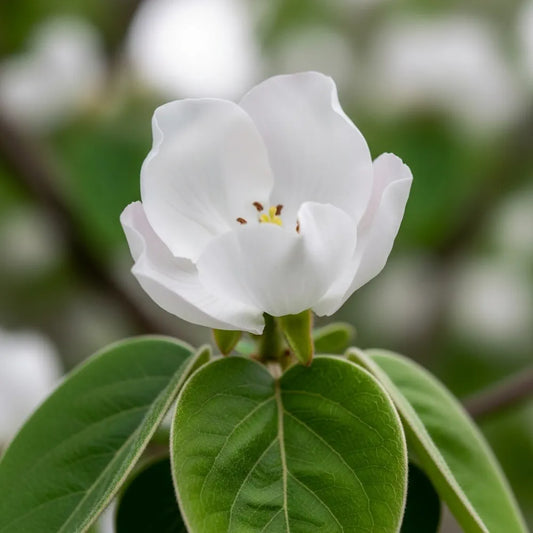
Rediscover the ancient charm of the Quince tree, a heritage fruit that brings architectural beauty and culinary delight to the British garden. Renowned for their gnarled, picturesque branches and large, pale pink blossoms that unfurl in spring, these hardy trees produce aromatic, golden-yellow fruit in late autumn. High in pectin and possessing a unique, heady fragrance, quinces are prized for making rich jellies, jams, and the traditional sweet paste, membrillo.
While often associated with sprawling country orchards, Quince trees are surprisingly versatile and adapt exceptionally well to smaller spaces. Cultivating them in containers is an excellent option for those wishing to enjoy their scent and structure on a terrace or courtyard. To ensure your tree thrives as a stunning patio feature, ample root space is essential. Our 65cm to 90cm diameter rustic whisky barrels, available with faded silver, rustic, or painted black rings, provide a deep, robust home that complements the trees traditional character. For a more contemporary aesthetic, consider our durable zinc square planters, offered in sophisticated finishes including matte black, matte grey, white, matte copper, and gloss black. Alternatively, to maintain a natural, organic texture, our up to 60cm wood square planters in natural wood, black, or grey offer the perfect foundation for your container garden. Browse our collection below to find the ideal variety for your outdoor space.
 Go to basket