Collection: Plum Trees

Premium Plum Trees for the British Climate
Read More

Frequently asked questions

  • When is the best time to plant plum trees?

    The ideal time to plant bare-rootplum trees is between November and March whilst the tree is dormant. Container-grown trees can be planted at any time of year, provided the ground is not frozen or waterlogged. Ensure you water them well during dry spells if planted in spring or summer.

  • Do I need two plum trees to get fruit?

    Many modern plum varieties are self-fertile, meaning they produce fruit without a partner tree. However, some varieties require a pollination partner from a similar flowering group to set fruit. It is best to check the specific label or description of your chosen variety before buying.

  • When should I prune my plum tree?

    Plum trees should be pruned in late spring or summer to minimise the risk of silver leaf disease. Avoid pruning in winter when fungal spores are most active in damp conditions. Remove any dead, damaged, or crossing branches to maintain an open shape.

  • What type of soil do plum trees prefer?

    Plum trees thrive in well-drained, loamy soil that retains some moisture but does not become waterlogged. They prefer a slightly acidic to neutral pH and benefit from organic matter like compost being dug in before planting. Avoid planting them in heavy clay that stays wet or very sandy soil that dries out too quickly.

  • How long does it take for a plum tree to bear fruit?

    Most plum trees will begin to produce fruit within two to three years after planting, depending on the age of the tree when bought. Trees grown on dwarfing rootstocks may fruit sooner than those on more vigorous rootstocks. Patience is required as heavy crops usually develop once the tree is fully established.

  • What are common pests that affect plum trees?

    Common pests include plum moth caterpillars, which bore into the fruit, and aphids that curl the leaves. Wasps may also attack ripening fruit, especially if the skin is damaged. Using grease bands on the trunk and pheromone traps can help manage these pest populations naturally.

  • How often should I water a newly planted plum tree?

    Newly planted trees require regular watering, especially during dry spells in their first growing season. A full can of water once a week is usually sufficient, but more may be needed in extreme heat. Once established, plum trees generally only need supplemental water during prolonged droughts.

  • How do I know when plums are ready to harvest?

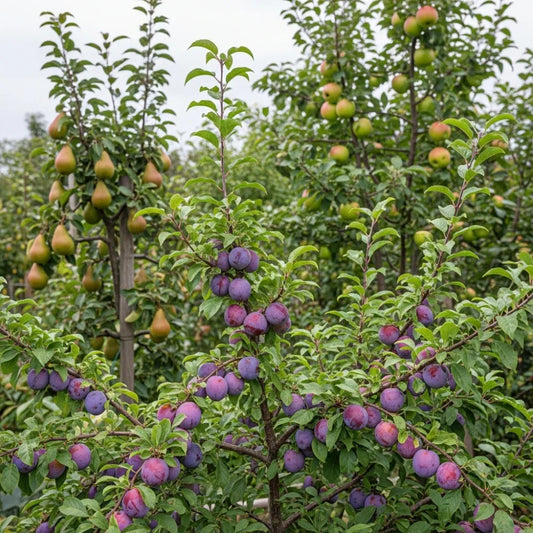
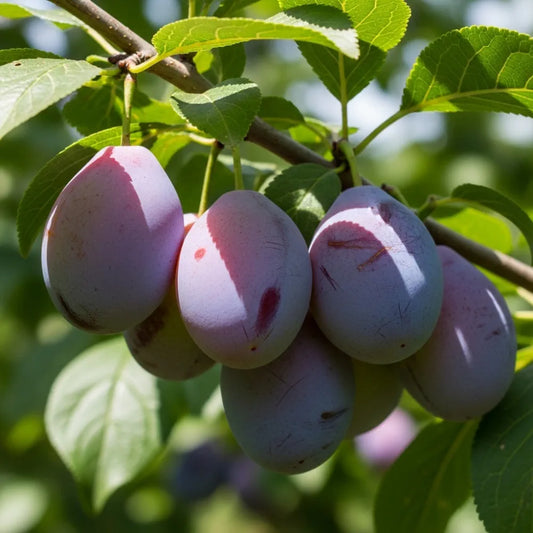
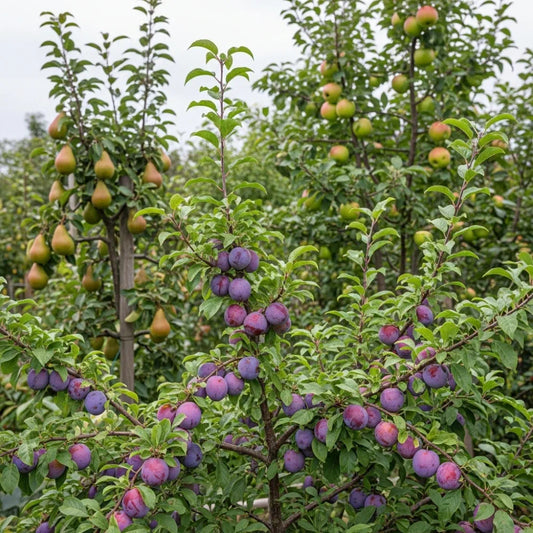
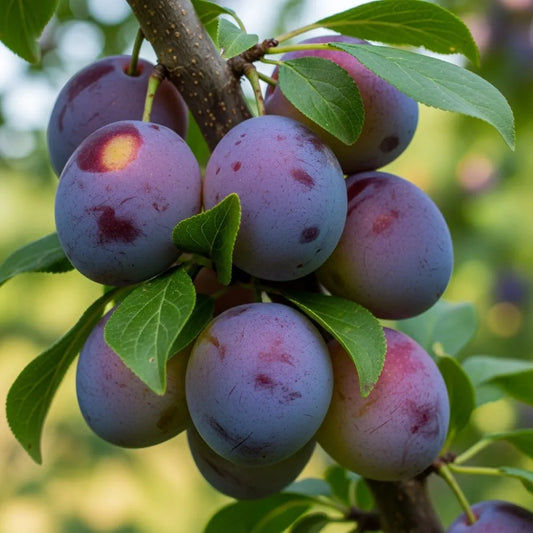
    Plums are ready to pick when they feel slightly soft to the touch and come away easily from the branch. The skin colour should be fully developed, and the fruit should have a sweet aroma. It is often best to harvest them in stages as they do not all ripen at the exact same time.