Collection: Cherry Trees

Cherry Trees and for British Gardens
Read More

Frequently asked questions

  • Do ornamental cherry trees produce edible fruit?

    Most ornamental cherry trees are bred specifically for their flowers and produce small, bitter fruit that is not palatable for humans. While birds may eat these small cherries, they lack the flesh and sweetness of culinary varieties. For edible crops, you must plant a fruiting cherry variety such as 'Morello' or 'Stella'.

  • Can cherry blossom trees be grown in pots?

    Yes, dwarf varieties of flowering cherry are excellent choices for container gardening. Use a substantial pot with adequate drainage holes and fill it with a loam-based compost. Potted trees require more frequent watering than those planted in the ground, especially during dry summer periods.

  • When should I prune my cherry blossom tree?

    Pruning should be carried out in mid-summer to minimise the risk of silver leaf disease and bacterial canker. Unlike many deciduous trees, you should avoid pruning cherries in winter when they are dormant. Light pruning is usually sufficient to remove dead or crossing branches and maintain the tree's shape.

  • How large does a mature cherry blossom tree grow?

    The size depends heavily on the variety, but most ornamental cherries grow between four and eight metres in height. Dwarf varieties suitable for small gardens or large pots may stay under two metres. Always check the specific cultivar and rootstock to ensure the tree fits your available space.

  • What type of soil is best for cherry blossom trees?

    These trees prefer moist, fertile, and well-drained soil. They are adaptable to various soil types, including clay, chalk, and loam, as long as the ground does not become waterlogged. Mixing in organic matter like garden compost when planting helps improve drainage and soil structure.

  • Do cherry blossom trees require full sun?

    Cherry blossom trees thrive best in full sun, which helps produce the most impressive display of flowers. They can tolerate partial shade, but this may result in fewer blooms and less vibrant leaf colour in autumn. It is also beneficial to choose a sheltered spot to protect the delicate blossoms from wind.

  • How long do cherry blossom trees stay in bloom?

    The flowering period typically lasts for about two to three weeks during the spring. Weather conditions significantly influence this duration, as heavy rain or strong winds can strip the petals prematurely. Most varieties in the UK flower between late March and early May.

  • When is the best time to plant a cherry blossom tree?

    In the UK, the ideal time to plant bare-rootcherry blossom trees is between October and March while the tree is dormant. Container-grown trees can be planted at any time of year, provided the ground is not frozen or waterlogged. Planting in autumn allows the roots to establish before the spring growing season begins.

  • How long does it take for a new cherry tree to bear fruit?

    Most young cherry trees will begin to produce a small crop within two to three years of planting. Heavier cropping generally occurs once the tree is four to five years old and has established a robust root system. The time to fruit can vary slightly depending on the specific variety and the rootstock used.

  • What type of soil conditions do cherry trees require?

    Cherry trees thrive in deep, fertile, and well-drained soil with a slightly acidic to neutral pH. They struggle in waterlogged conditions, so heavy clay soils should be improved with organic matter and grit to aid drainage. Mulching around the base in spring helps retain moisture and suppresses weed growth.

  • When should I prune my fruiting cherry tree?

    Cherry trees should always be pruned in summer, typically during July or August, rather than in winter. Pruning during the active growing season allows wounds to heal quickly, significantly reducing the risk of silver leaf disease and bacterial canker. Avoid winter pruning as dormant trees are highly susceptible to fungal infections.

  • When is the best time to plant cherry trees in the UK?

    The ideal time to plant bare-rootcherry trees is between November and March when the tree is dormant and leafless. Pot-grown trees can be planted at any time of year, provided the ground is not frozen or waterlogged. Ensure you water them regularly during their first summer to help establish a strong root system.

  • Do I need more than one cherry tree to produce fruit?

    It depends on the variety, as some cherry trees are self-fertile and will fruit alone. However, many varieties are self-sterile and require a compatible partner tree nearby for pollination. Even self-fertile trees often produce a heavier crop when planted near a different variety.

  • How long does it take for a cherry tree to bear fruit?

    Most cherry trees will begin to produce fruit between three and five years after planting. Trees grafted onto dwarf rootstocks often start fruiting sooner than those on vigorous rootstocks. Full cropping potential is usually reached after seven years.

  • Can I grow a cherry tree in a container or pot?

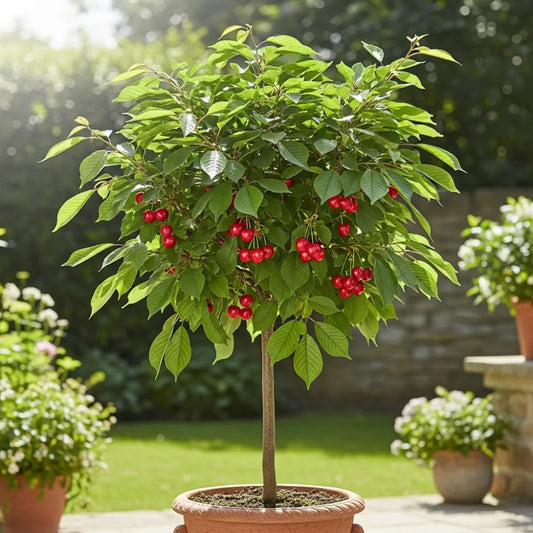
    Yes, you can grow cherry trees in pots if you select a variety grafted onto a dwarf rootstock like Gisela 5. Use a large heavy pot with good drainage and a loam-based compost. Regular watering and seasonal feeding are essential, as container soil dries out faster than open ground.

  • When should I prune my cherry tree?

    Prune stone fruit trees like cherries in late summer to minimize the risk of silver leaf disease and bacterial canker. Avoid pruning in winter when the tree is dormant, as this leaves wounds susceptible to infection. Always use clean, sharp secateurs and cover large cuts with wound paint.

  • What soil conditions do cherry trees require?

    Cherry trees thrive in deep, fertile, and well-drained soil with a slightly acidic to neutral pH. They struggle in heavy clay or waterlogged soil, which can cause root rot. Incorporating organic matter such as garden compost can help improve soil structure and drainage.

  • Do I need two cherry trees to produce fruit?

    This depends on the variety, as some cherry trees are self-fertile and can produce fruit on their own. However, many traditional varieties require a pollination partner of a different variety flowering at the same time to set fruit. Checking the pollination group of your chosen tree is essential before planting.

  • How large will a cherry tree grow in a small garden?

    The ultimate height of a cherry tree is primarily determined by the rootstock it is grafted onto. For small gardens, look for trees on dwarf rootstocks like 'Gisela 5', which typically reach heights of 2.5 to 3 metres. These compact varieties are suitable for small borders or growing in large containers.