Collection: Rowan Trees

Versatile Rowan Trees for British Gardens and Patios
Read More

Frequently asked questions

  • How should I prune a Rowan tree?

    Rowan trees require very little pruning, which should be carried out during the dormant season in winter. You should focus on removing any dead, diseased, or crossing branches to maintain a healthy framework. Avoid pruning in late spring or summer, as the tree may bleed sap which can weaken it.
  • What diseases commonly affect Rowan trees?

    Rowan trees can be susceptible to fireblight, a bacterial disease that causes leaves to look scorched, and silver leaf fungus. They may also suffer from honey fungus if planted in poorly drained soil. Keeping the tree healthy with proper watering and air circulation helps prevent these issues.
  • Does a Rowan tree attract wildlife?

    Yes, the Rowan is known as a wildlife-friendly tree that supports significant biodiversity. Its spring flowers provide nectar for pollinating insects, while the autumn berries are a vital food source for birds like blackbirds and thrushes. The foliage is also consumed by the caterpillars of several moth species.
  • What soil conditions do Rowan trees prefer?

    Rowan trees are tolerant of most soil types, including acidic and nutrient-poor soils. They thrive best in well-drained sites and can struggle in heavy clay that retains too much water. While they prefer full sunlight, they can also grow successfully in partial shade.
  • Are berries from a Rowan tree edible?

    Raw Rowan berries are bitter and contain parasorbic acid, which can cause stomach upset if eaten uncooked. They must be cooked to neutralise this acid, after which they are safe to eat. They are popularly used to make Rowan jelly, a tart preserve that pairs well with game and meats.
  • How large does a mature Rowan tree grow?

    A mature Rowan tree typically reaches a height of 8 to 15 metres, depending on the variety and local conditions. It has a relatively slender spread of about 4 to 8 metres, making it suitable for smaller gardens. It generally takes 20 to 50 years for the tree to reach its full size.
  • When is the best time to plant a Rowan tree?

    The ideal time to plant a Rowan tree is during the dormant season, which occurs between late autumn and early spring. Planting during this period allows the roots to establish before the active growing season begins. Ensure the ground is not frozen or waterlogged when you put the tree in.
  • What is a Rowan tree?

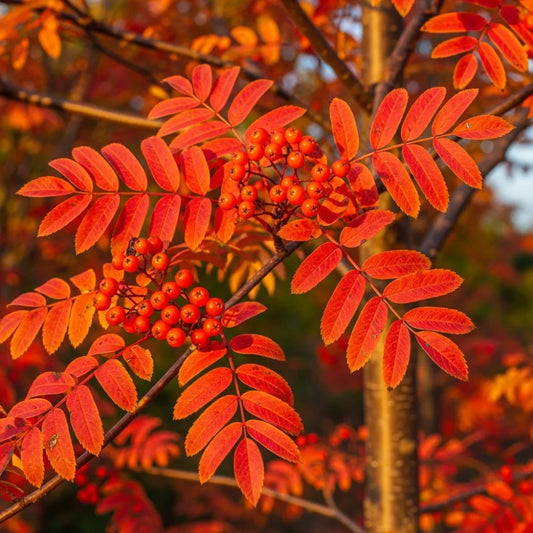
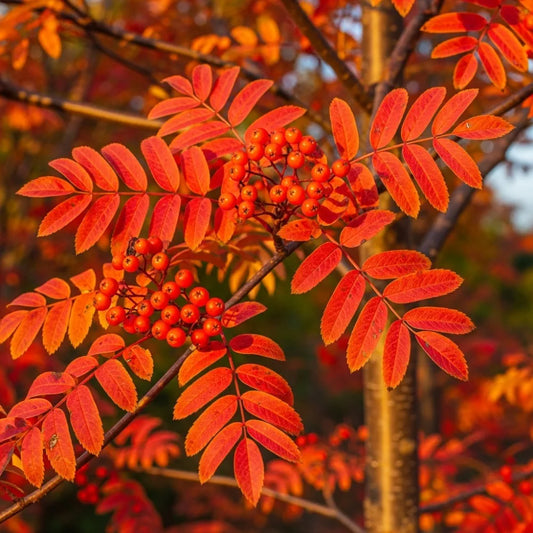
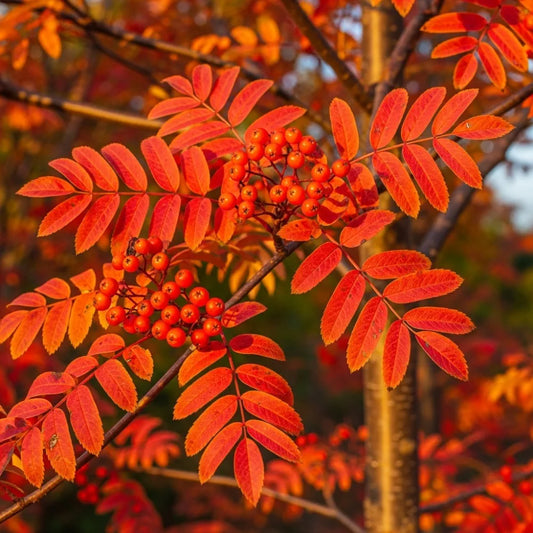
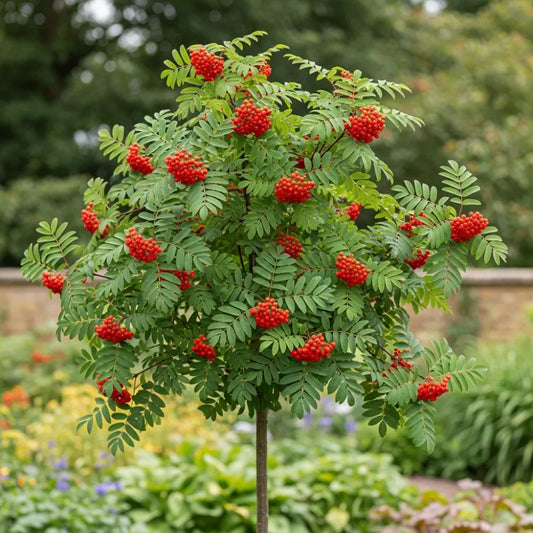
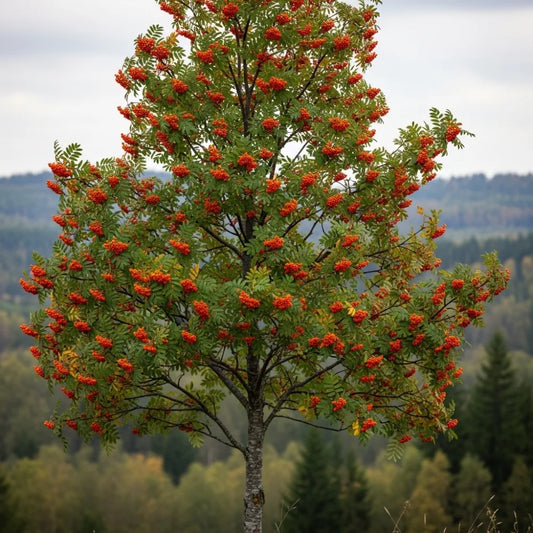
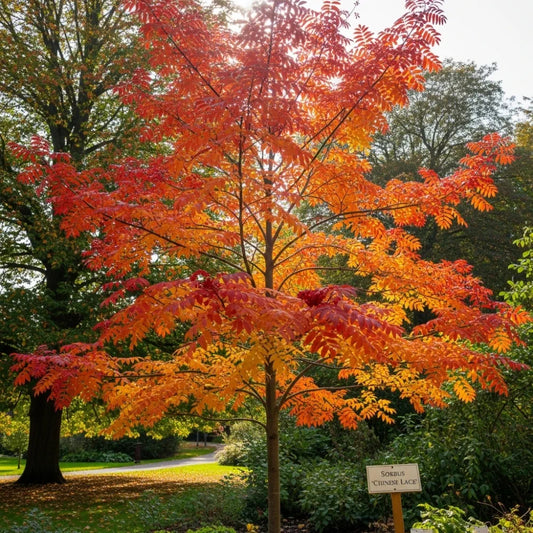
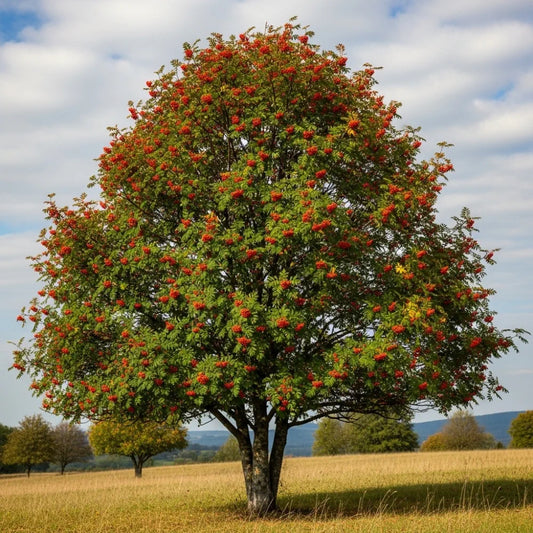
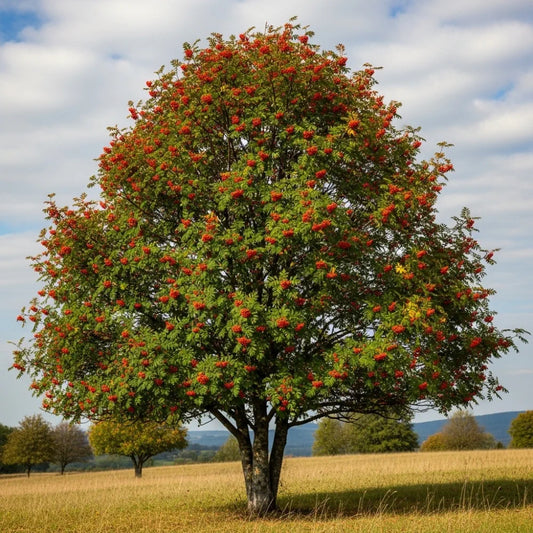
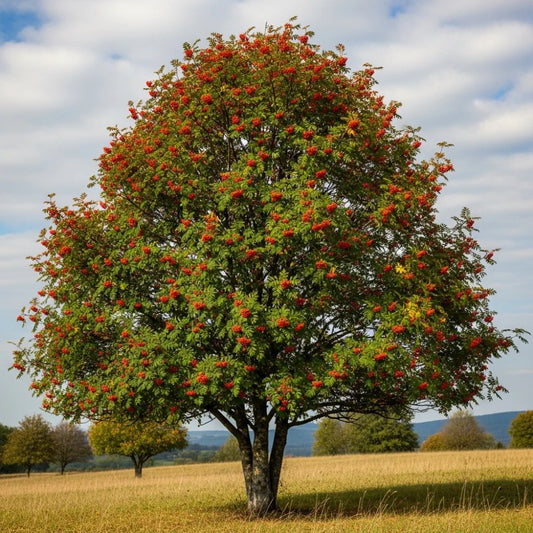
    The Rowan, also known as Mountain Ash, is a native British deciduous tree recognised for its pinnate leaves and red berries. It is a hardy species often found in the wild across the Scottish Highlands but thrives equally well in urban gardens. The tree typically blossoms with clusters of creamy-white flowers in late spring.