Collection: Pond Plants

Marginal and Oxygenating Pond Plants
Read More

Frequently asked questions

  • Which plants are best for a pond in a pot?

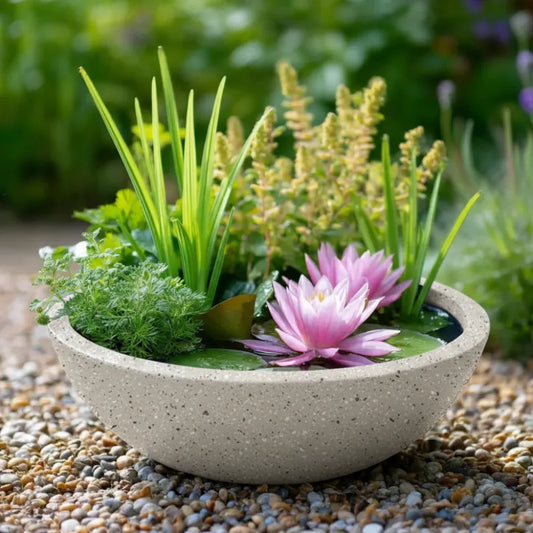
    The best plants include <strong>water lilies</strong> for floating flowers and shade, <strong>Hydrocotyle ‘Novae‑Zelandiae’</strong> for creeping texture, and <strong>Eleocharis acicularis | Dwarf hairgrass</strong> for grassy, shallow-margin growth. These species thrive in a contained water environment.
  • What types of pond plants do I need?

    Most ponds benefit from a mix of plants, including marginal plants for the edges, deep-water plants like water lilies for the surface, and submerged oxygenating plants to help keep the water clear and healthy.
  • How many pond plants should I add?

    A good rule of thumb is to cover around 50–60% of the pond surface with plants. This helps control algae growth while still leaving open water for light and movement.
  • Do pond plants need full sun?

    Many pond plants thrive in full sun, but there are also varieties that do well in partial shade. Always check individual plant requirements and consider how much sunlight your pond receives each day.
  • When is the best time to plant pond plants?

    Spring and early summer are ideal for planting pond plants, as warmer water temperatures encourage strong growth. Some hardy varieties can also be planted in early autumn.
  • Are pond plants good for wildlife?

    Yes, pond plants provide shelter, breeding areas and food sources for wildlife such as frogs, newts, insects and birds, helping to create a balanced garden ecosystem.
  • Do pond plants need maintenance?

    Pond plants are generally low maintenance, but occasional thinning and removal of dead growth will keep them healthy and prevent overcrowding.