-
When should I apply fertiliser to my apple trees?
Apply a general-purpose granular fertiliser, such as blood, fish, and bone, in late winter or early spring. This timing supports new growth and blossom development as the tree breaks dormancy. Mulching around the base with organic matter in spring also helps retain moisture and suppress weeds.
-
Why are there spots on the leaves of my apple tree?
Spots on leaves are often a sign of apple scab, a common fungal disease that thrives in damp conditions. It causes dark, scabby blotches on both leaves and fruit, potentially leading to premature leaf fall. Pruning to improve air circulation and removing fallen leaves can help reduce the spread of infection.
-
What type of soil is best for growing apple trees?
Apple trees flourish in well-drained, loamy soil with a neutral to slightly acidic pH between 6.0 and 7.0. They dislike waterlogged conditions, so good drainage is essential if you have heavy clay soil. Incorporating well-rotted organic matter before planting helps improve soil structure and fertility.
-
What does the rootstock on an apple tree do?
The rootstock controls the ultimate size, vigour, and disease resistance of the apple tree. For example, an M27 rootstock produces a very small dwarf tree suitable for pots, while MM106 produces a medium-sized tree. Selecting the correct rootstock ensures the tree fits comfortably in your specific garden space.
-
How do I know when apples are ready to harvest?
Apples are ready when they can be easily twisted from the branch with a gentle lift of the hand. You can also cut a fruit open to check if the seeds have turned from white to brown. Harvest times vary significantly by variety, spanning from late summer to late autumn.
-
Do I need two apple trees to produce fruit?
Most apple trees require a pollination partner of a different variety that flowers at the same time. However, self-fertile varieties are available which can produce fruit without a companion. Even for self-fertile trees, having a second tree nearby often improves the crop yield.
-
How often should I prune my apple tree?
Standard apple trees should be pruned once a year, typically in winter between November and early March. This encourages a strong structure and promotes fruit bud formation for the following season. Trained forms like cordons or espaliers usually require summer pruning to restrict their growth.
-
When is the best time to plant apple trees in the UK?
The ideal time to plant bare-root apple trees is between November and March while the tree is dormant. Container-grown trees can be planted all year round, provided the ground is not frozen or waterlogged. Planting in autumn allows the roots to establish before the growing season begins.
-
When should I prune apple and pear trees?
Most apple and pear trees should be pruned in winter, between November and early March, while the tree is dormant. This stimulates vigorous growth for the following season and helps maintain an open shape. However, stone fruits like plums and cherries must be pruned in summer to minimize the risk of silver leaf disease.
-
When is the best time to prune espalier apple trees?
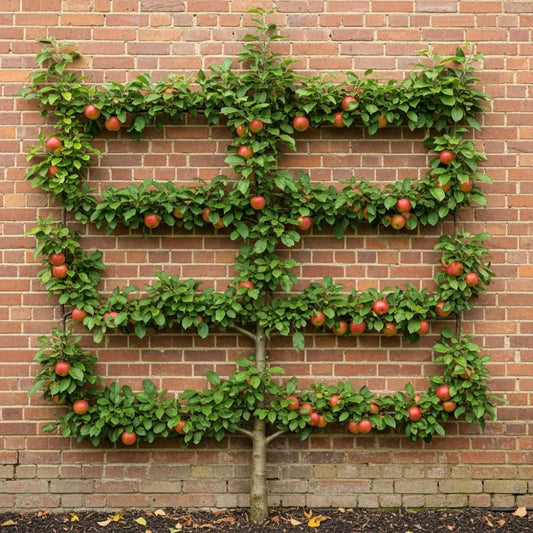
The main summer pruning should take place in late July or August to restrict growth and encourage fruit bud formation. A secondary winter prune is performed when the tree is dormant to tidy up the structure and remove dead wood. Consistent timing helps maintain the flat shape and prevents the tree from becoming overly vigorous.
-
What is the main difference between a crabapple and an apple?
The botanical distinction is based strictly on the size of the fruit rather than the species. If the fruit is less than two inches (5 centimetres) in diameter, it is classified as a crabapple. Fruit larger than this measurement is considered a standard apple.
-
Do crabapple trees help pollinate other apple trees?
Crabapples are widely known as excellent pollinators for domestic eating apples because they produce an abundance of pollen. They have a long flowering period that often overlaps with many different apple varieties. Planting one nearby can significantly improve the fruit yield of your orchard.